
How AI Is Transforming Digital Marketing in 2026
Primary Keyword: AI in Digital Marketing 2026
Secondary keyword:
- Artificial Intelligence Marketing
- AI Marketing Tools
Meta Title:
How AI Is Transforming Digital Marketing in 2026: Complete Guide for Marketers
Meta Description:
Discover how AI in Digital Marketing boosts engagement, conversions, and campaign efficiency in 2026.
slug
ai-in-digital-marketing 2026
Table of contents:http://How AI Is Transforming Digital Marketing in 2026
Introduction
AI in Digital Marketing helps businesses achieve better results through automation and data-driven insights. the transformation. Businesses of all sizes are using AI to improve customer experiences, automate repetitive tasks, generate high-quality content, and make data-driven decisions. In 2026, AI is no longer a future trend—it has become a critical part of every successful marketing strategy.
The rise of AI in Digital Marketing 2026 has changed how brands connect with customers. From personalized recommendations and predictive analytics to intelligent chatbots and automated advertising, AI helps marketers achieve better results while saving time and resources. Companies that embrace AI gain a competitive advantage by understanding customer behavior more accurately and delivering relevant experiences at the right moment.
This guide explores how AI is transforming digital marketing in 2026, the benefits it offers, and the strategies businesses can use to stay ahead in an increasingly competitive market.
H2: The Growing Importance of AI in Digital Marketing 2026
One of the biggest reasons for the growing importance of AI in Digital Marketing is its ability to improve decision-making through real-time insights. Marketers can now predict customer needs, optimize campaigns instantly, and reduce wasted ad spend by targeting the right audience at the right time. This not only improves ROI but also strengthens customer engagement and satisfaction.
H3: Key Benefits of AI in Digital Marketing 2026
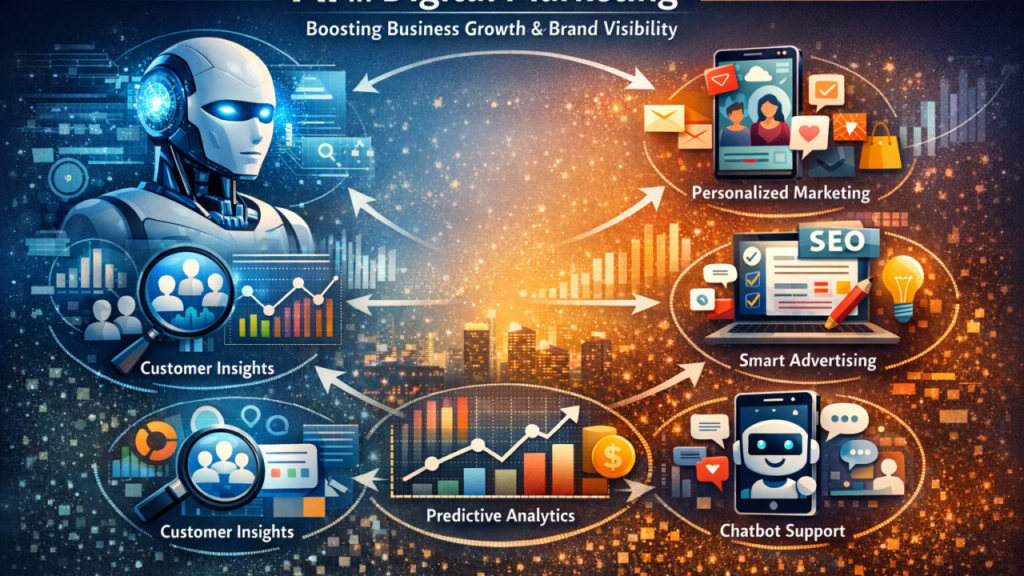
AI in Digital Marketing 2026 provides several major advantages that directly improve marketing performance and business growth. These benefits go beyond simple automation and extend into advanced intelligence, predictive analytics, and deep personalization, allowing businesses to make smarter decisions, optimize campaigns in real time, and deliver highly relevant customer experiences at scale.
- Smarter audience understanding: AI studies user behavior such as clicks, time spent on pages, and purchase patterns to build detailed customer profiles that improve targeting accuracy.
- Increased marketing efficiency: Routine tasks like campaign scheduling, reporting, and email automation are handled by AI, allowing teams to focus on creative strategy and decision-making.
- Higher conversion rates: By identifying high-intent users and delivering the right message at the right time, AI significantly improves conversion performance.
- Real-time optimization: Campaigns are constantly monitored and adjusted automatically to ensure maximum performance without manual intervention.
- Better budget utilization: AI reduces wasted ad spend by focusing resources on the most effective channels and audiences.
H2: AI-Driven Personalization in 2026
Personalization has become one of the most powerful drivers of digital marketing success in 2026. Customers now expect brands to understand their needs instantly and deliver tailored experiences across every digital touchpoint, including websites, mobile apps, emails, and social media platforms. AI enables this level of personalization at scale by continuously analyzing user data in real time and generating highly relevant content, product recommendations, and offers that match individual preferences and behavior patterns.
This shift has completely transformed customer engagement by replacing generic, one-size-fits-all messaging with dynamic, adaptive experiences. Instead of showing the same content to every user, businesses now adjust layouts, promotions, and messaging based on how each visitor interacts with the brand. AI systems track signals such as clicks, browsing history, purchase behavior, and time spent on pages to understand user intent more accurately and respond with the most relevant experience at the right moment.
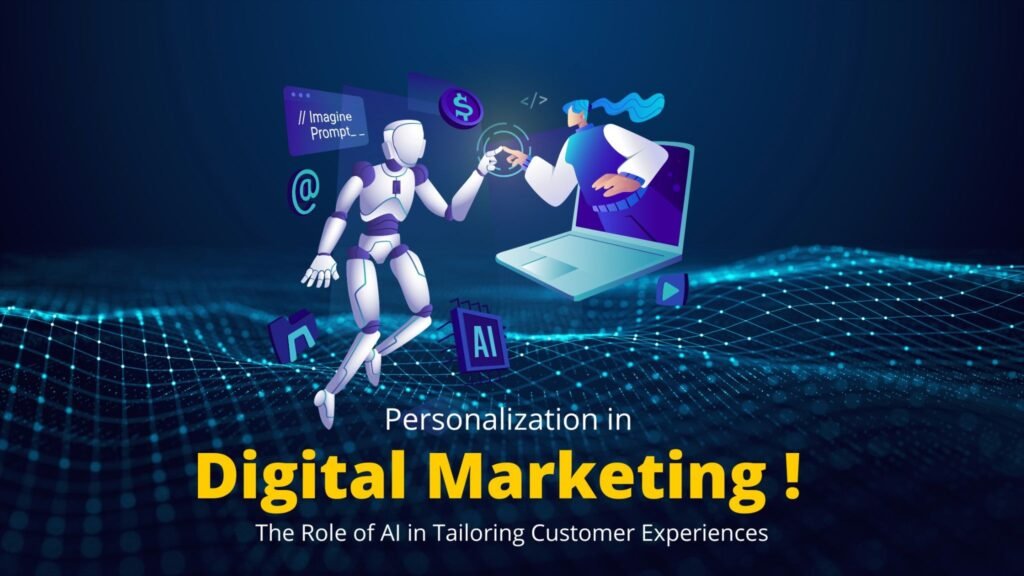
H3: How AI Enables Deep Personalization
AI personalization works by continuously tracking and analyzing customer interactions across websites, apps, emails, and social media platforms to understand user behavior, preferences, and intent in real time. It uses this data to build detailed customer profiles and deliver highly relevant experiences such as personalized product recommendations, targeted messages, and dynamic content that matches individual interests.
AI in Digital Marketing also improves personalization over time by learning from each interaction and refining its predictions. By analyzing user behavior, preferences, and past interactions, AI in Digital Marketing helps businesses understand what their audience truly wants, allowing them to provide the right content, recommendations, and offers at the right time. This creates a smoother and more engaging customer journey, improves overall user experience, and increases conversion rates across multiple digital channels.
H3: Key AI-Driven Personalization Strategies in 2026
- Behavior-based recommendations: AI suggests products or services based on previous searches, purchases, and browsing patterns.
- Dynamic content adaptation: Website content changes automatically depending on user interests, location, and activity history.
- Personalized email journeys: Each user receives tailored email sequences with relevant offers and content designed to increase engagement.
- Smart retargeting campaigns: Users are shown ads that match their recent behavior, increasing the chances of conversion.
- Real-time journey optimization: AI adjusts the customer journey instantly based on user interactions to improve retention and satisfaction.
H2: AI in Content Creation and Marketing Automation
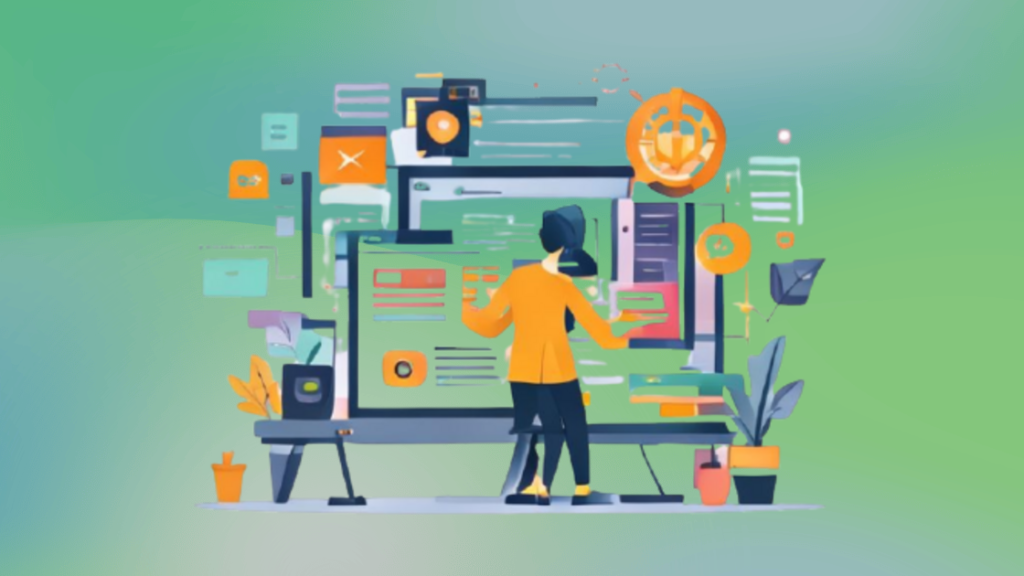
Content creation in 2026 has become significantly faster and more scalable due to AI-powered tools. Businesses no longer need to manually create every piece of content from scratch. Instead, AI assists in generating structured drafts, optimizing messaging, and ensuring consistency across multiple platforms.
AI in Digital Marketing is transforming how content is created, but human creativity remains essential in refining tone, storytelling, and emotional connection. AI in Digital Marketing acts as a powerful support system that enhances productivity rather than replacing marketers. It helps with idea generation, keyword integration, formatting, and content optimization, but the final creative direction still depends on human input to maintain authenticity and brand volume
H3: Applications of AI in Content Creation
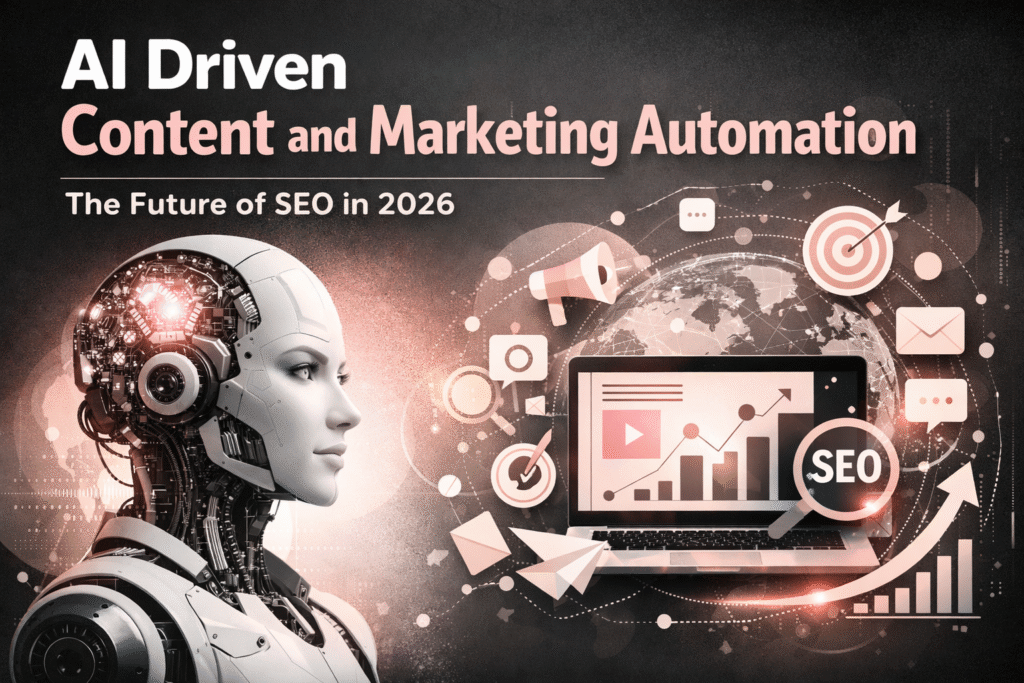
AI is widely used across different content formats to speed up production and improve quality by helping marketers generate blogs, social media posts, product descriptions, email campaigns, and video scripts more efficiently. It analyzes data, keywords, and audience behavior to create relevant and structured content that matches user intent and improves engagement.
AI in Digital Marketing also enhances content performance by analyzing data and suggesting improvements in readability, structure, and SEO optimization. By using AI in Digital Marketing, businesses can maintain consistent tone and style across all content while scaling production efficiently. AI in Digital Marketing provides actionable insights on which topics resonate most with audiences, which headlines perform best, and how content can be optimized for maximum engagement. This not only improves visibility on search engines but also strengthens user experience, ensuring that every interaction with content is meaningful and valuable. Ultimately, AI in Digital Marketing allows marketers to focus on creativity and strategy while the system handles optimization, analysis, and repetitive tasks.
H3: AI Applications in Content Creation and Marketing 2026
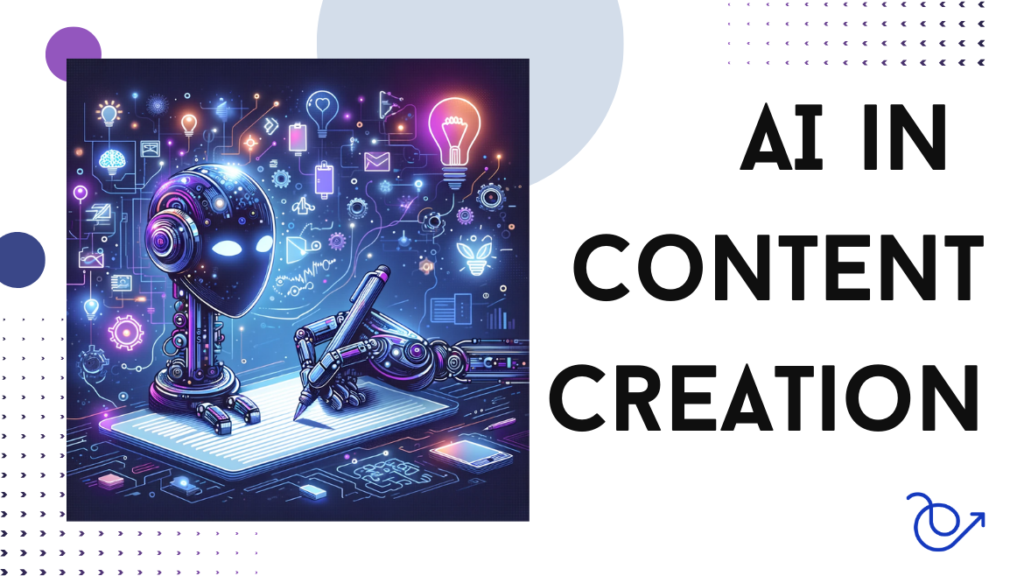
AI is widely used in 2026 to speed up content creation and improve marketing efficiency across digital platforms. It helps generate blogs, social media posts, emails, and product descriptions while keeping content relevant and SEO-friendly.
It also assists marketers by optimizing content performance, suggesting keywords, and personalizing messages based on audience behavior. This makes marketing faster, smarter, and more effective.
Key Applications of AI in Content Creation and Marketing 2026
- Blog and article generation: AI creates structured drafts based on keywords and topics, helping writers save time while maintaining SEO quality.
- Social media content creation: Captions, hashtags, and post ideas are generated based on trending topics and audience behavior.
- E-commerce product descriptions: AI writes clear, persuasive, and SEO-friendly descriptions that improve conversion rates.
- Email marketing campaigns: Subject lines and email content are optimized for higher open and click-through rates.
- Video script writing: AI helps structure video storytelling for ads, tutorials, and promotional campaigns.
H2: AI-Powered SEO Optimization in 2026
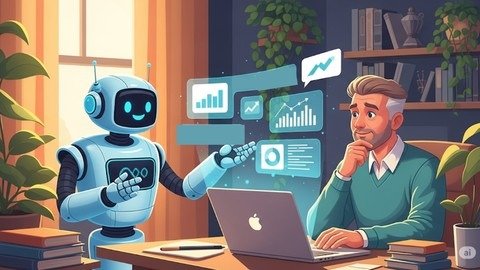
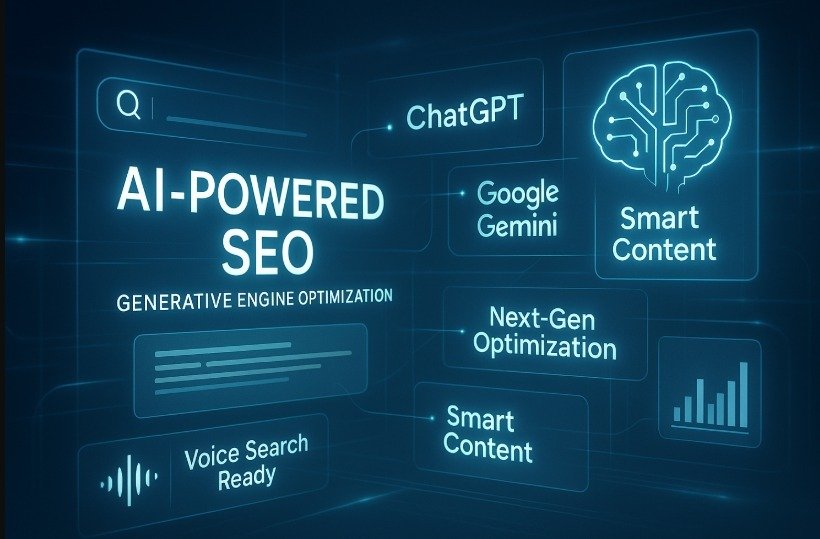
SEO has evolved significantly with AI integration, becoming more focused on user intent, content relevance, and engagement quality. Search engines in 2026 are highly intelligent and prioritize content that best satisfies user queries rather than simply matching keywords.
AI in Digital Marketing helps marketers align their content with search engine expectations by analyzing ranking patterns, keyword performance, and user behavior. This leads to better visibility and higher organic traffic. AI in Digital Marketing is focused on understanding user intent, content relevance, and overall engagement quality rather than just keyword matching. In 2026, search engines are highly intelligent systems that evaluate how well content satisfies a user’s query, how long users engage with it, and whether it truly answers their needs. As a result, ranking is no longer dependent on keyword density alone but on semantic meaning, topical authority, and user experience signals that indicate content value.
AI now plays a major role in helping marketers adapt to these changes by analyzing search trends, ranking patterns, and user behavior in real time. It identifies which keywords are gaining traction, how competitors are performing, and what type of content is most likely to rank for specific queries. Additionally, AI tools suggest improvements in structure, readability, internal linking, and content depth, enabling marketers to create highly optimized content that aligns with search engine expectations. This results in significantly improved visibility, stronger organic traffic growth, and more consistent long-term SEO performance.
H3: How AI Improves SEO Performance
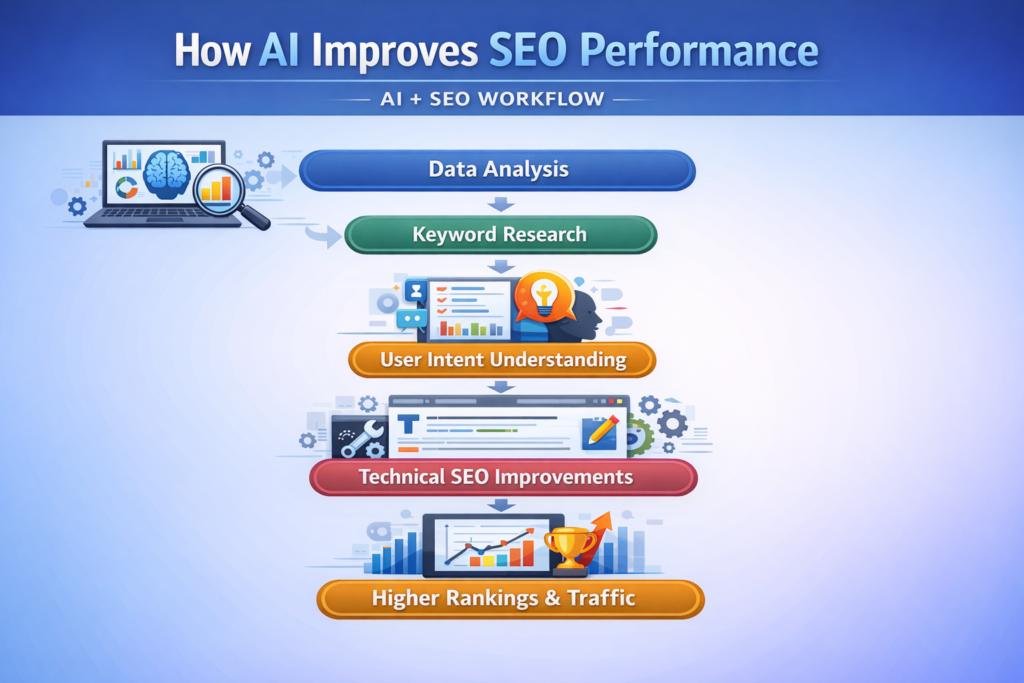
AI in Digital Marketing enhances SEO strategies by analyzing search behavior, keyword trends, and content performance to help marketers create more effective and targeted optimization strategies. AI in Digital Marketing improves understanding of user intent and provides data-driven insights that help businesses produce content that ranks better on search engines and attracts more organic traffic.
- Advanced keyword discovery: AI identifies high-performing keywords based on competition, search volume, and intent.
- User intent analysis: Content is optimized based on what users actually want rather than just search terms.
- Content structuring guidance: AI suggests improvements in headings, readability, and formatting for better ranking.
- Competitor gap analysis: AI identifies missing topics and opportunities by analyzing competitor content.
- On-page SEO improvements: Meta tags, internal linking, and readability are optimized automatically.
H2: Predictive Analytics in AI-Driven Marketing
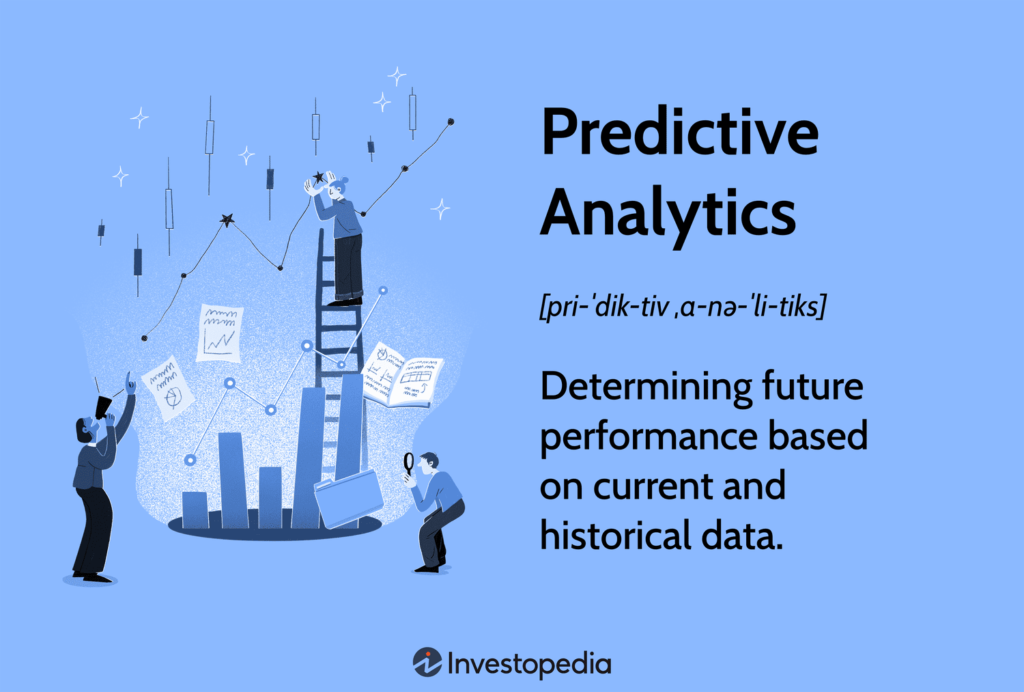
Predictive analytics has become one of the most powerful and game-changing applications of AI in Digital Marketing in 2026 because it enables businesses to accurately forecast future customer behavior by analyzing both historical data and real-time interactions across multiple digital channels. Instead of simply reacting to what customers have already done, AI in Digital Marketing allows marketers to anticipate what users are likely to do next—such as making a purchase, abandoning a cart, or disengaging from a brand—and take proactive actions to influence those outcomes in a meaningful way. This shift has completely transformed marketing into a forward-thinking, intelligence-driven discipline where strategic decisions are no longer based on assumptions or intuition, but on advanced probability models, machine learning predictions, and continuously evolving data insights that improve accuracy over time.
H3: Key Applications of Predictive Analytics
Predictive analytics is widely used across multiple areas of digital marketing to improve accuracy, efficiency, and decision-making. It helps businesses analyze historical and real-time data to forecast future outcomes such as customer behavior, sales trends, and campaign performance. This allows marketers to move from reactive strategies to proactive planning, where actions are taken based on predicted user needs and market movements.
In addition, predictive analytics is applied in lead scoring, customer segmentation, churn prediction, and demand forecasting. By identifying high-value customers and potential risks in advance, businesses can optimize their marketing efforts, allocate resources more effectively, and improve overall return on investment. This makes marketing strategies more data-driven, precise, and result-oriented.
H3: Key Use Cases of Predictive Analytics in Digital Marketing 2026
- Customer behavior forecasting: AI predicts what users are likely to do next based on past interactions.
- Sales and revenue forecasting: Businesses estimate future income to plan campaigns and budgets effectively.
- Lead prioritization: High-value leads are identified and prioritized for faster conversions.
- Churn prediction: AI detects users who are likely to stop engaging and triggers retention strategies.
- Demand forecasting: Businesses plan inventory and marketing campaigns based on predicted demand trends.
H2: AI in Digital Advertising and Campaign Optimization
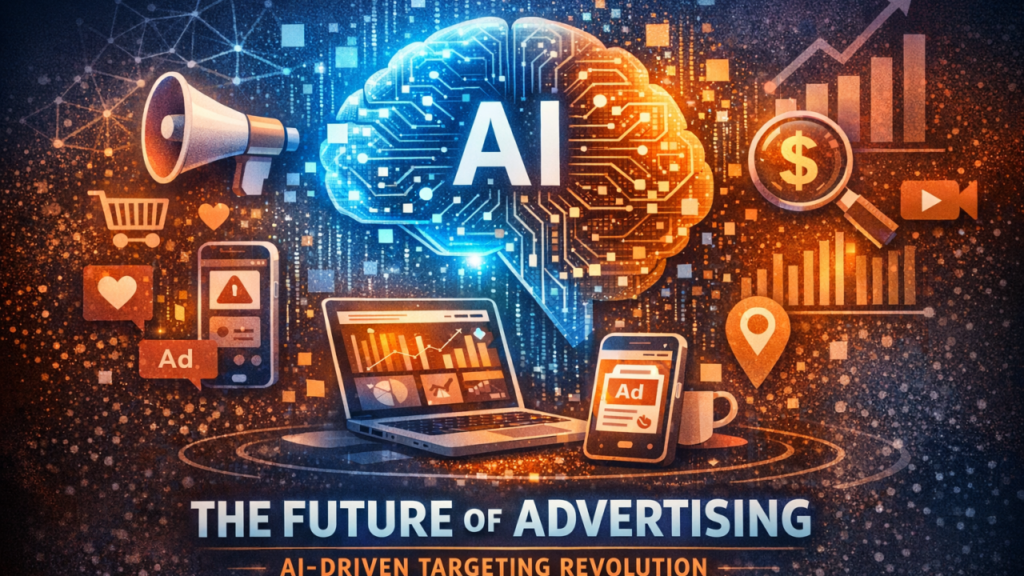
Digital advertising in 2026 has evolved into a highly automated and data-driven ecosystem where artificial intelligence plays a central role in managing, optimizing, and scaling campaigns across multiple platforms. AI systems continuously track large volumes of performance data such as impressions, clicks, conversions, audience engagement, and cost per acquisition in real time, allowing marketers to understand exactly how each campaign is performing at any given moment. Based on this constant flow of insights, AI automatically makes intelligent adjustments to bidding strategies, audience targeting, ad placements, and creative variations to ensure maximum efficiency and performance. This level of automation significantly reduces the need for manual intervention, eliminates guesswork, and minimizes wasted ad spend, ultimately helping businesses achieve higher returns on investment while maintaining consistent campaign optimization at scale.
H3: How AI Enhances Advertising Performance
AI enhances advertising performance by analyzing campaign data in real time and making automatic adjustments to targeting, bidding, and creative elements. It ensures ads reach the most relevant audience, maximizes ROI, and reduces wasted ad spend by continuously optimizing campaigns for better engagement and conversions.
AI also improves advertising performance by enabling continuous A/B testing of ad creatives, headlines, and formats to identify the most effective combinations. It studies user behavior patterns across platforms to refine audience segmentation and ensure ads are shown to people with the highest conversion potential.
H3: AI-Powered Strategies for Advertising Optimization in 2026
- Automated bid adjustments: AI changes bidding strategies based on competition and performance.
- Ad creative testing: Multiple versions of ads are tested to find the highest-performing ones.
- Audience refinement: Ads are shown only to users most likely to convert.
- Budget optimization: Spending is automatically shifted to high-performing campaigns.
- Performance monitoring: Real-time insights help marketers track and improve ROI.
H2: AI in Customer Experience and Support Systems
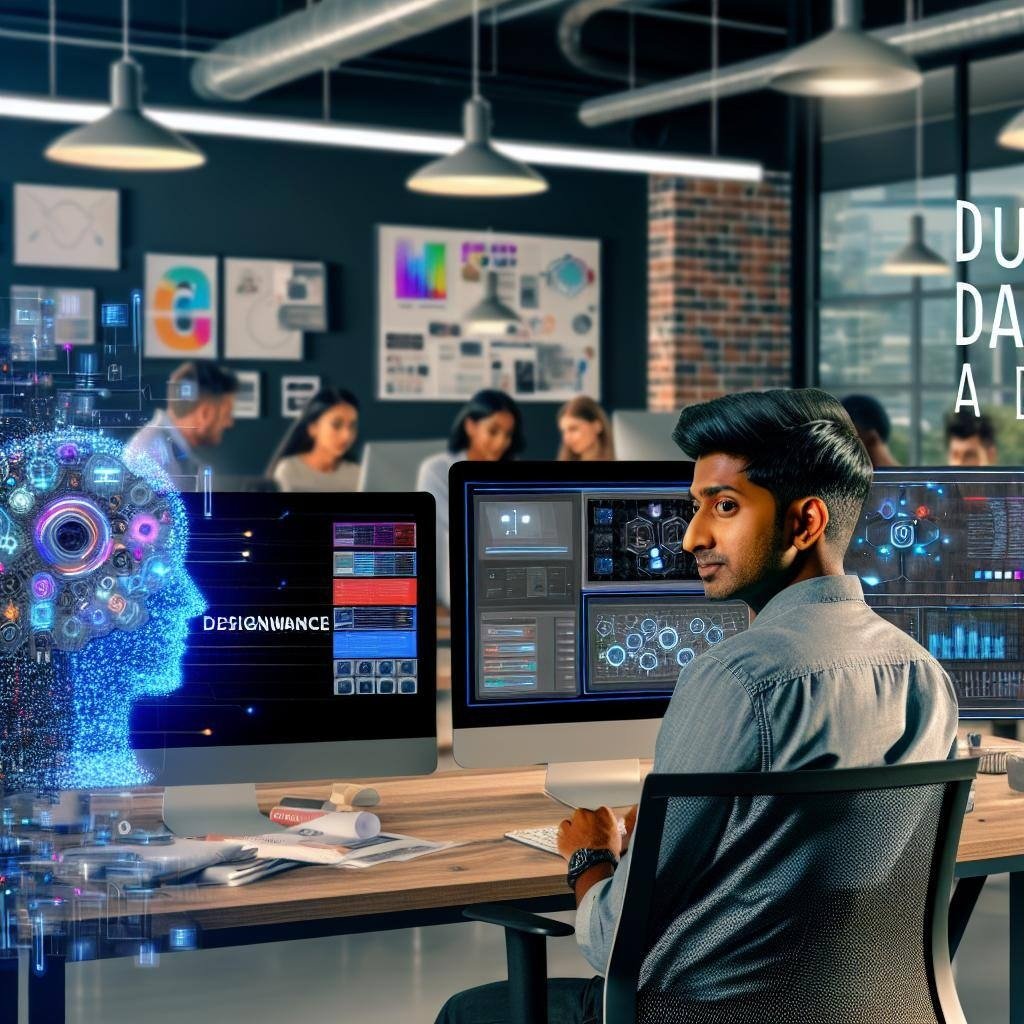
Customer experience has improved dramatically with the introduction of AI-powered chatbots and virtual assistants, which have completely changed the way businesses interact with their customers in 2026. These intelligent systems are capable of handling a wide range of customer queries instantly, providing accurate, context-aware, and personalized responses without the need for human intervention in most routine cases. Unlike traditional support systems that often involve long waiting times and limited availability, AI-driven assistants operate 24/7 across websites, mobile apps, and social media platforms, ensuring that customers receive immediate help whenever they need it.
In addition to speed and availability, these systems also improve the overall quality of support by learning from past interactions and continuously refining their responses. They can understand customer intent more effectively, detect common issues, and even guide users through step-by-step solutions for complex problems. This reduces frustration for customers while significantly lowering the workload for human support teams, allowing them to focus on more advanced or sensitive cases. As a result, businesses are able to deliver a more seamless, efficient, and satisfying customer experience that strengthens trust and long-term loyalty.
H3: Benefits of AI in Customer Experience
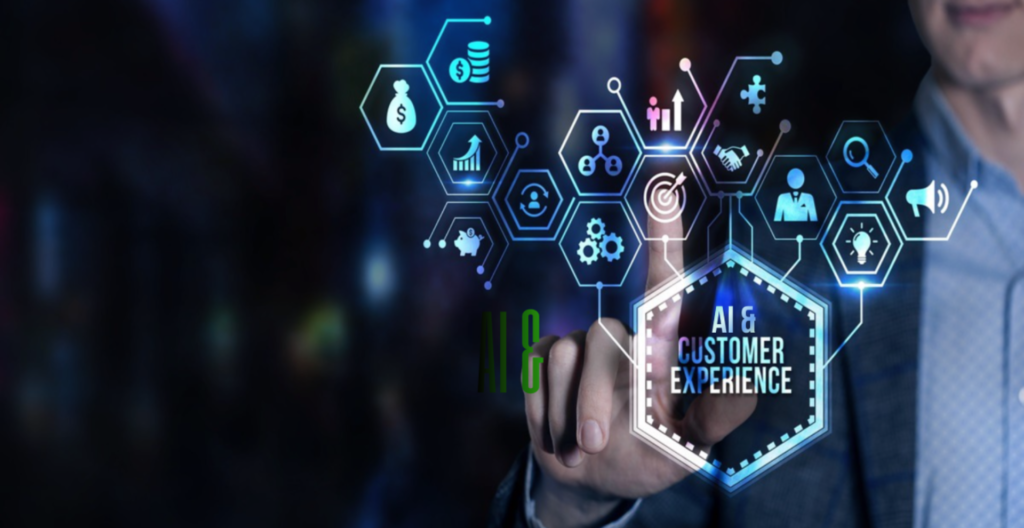
AI in Digital Marketing plays a major role in transforming how businesses operate online by improving SEO performance, enhancing content quality, and increasing overall visibility on search engines. It helps marketers understand user behavior more effectively and deliver highly personalized content that boosts engagement and builds stronger connections with audiences. By analyzing large amounts of data in real time, AI enables businesses to make smarter decisions, optimize campaigns, and significantly improve conversion rates. It also automates repetitive marketing tasks, making the entire process faster, more efficient, and cost-effective. Overall, AI in Digital Marketing is reshaping the industry by making strategies more intelligent, targeted, and results-driven across all digital channels
AI in Digital Marketing is revolutionizing the way brands interact with their audiences by combining advanced analytics, machine learning, and automation. It allows businesses to predict customer behavior, tailor messaging to individual preferences, and deliver content at the right time through the right channels. This not only enhances user experience but also drives higher engagement, loyalty, and sales. Moreover, AI helps marketers optimize their campaigns by identifying trends, measuring performance in real time, and suggesting improvements, reducing manual effort and errors. From chatbots and recommendation engines to automated email marketing and social media strategies, AI is making marketing smarter, faster, and more effective than ever before.
H3: Key Benefits of AI in Customer Support and Experience
- 24/7 availability: Customers receive instant responses at any time of day.
- Faster problem resolution: AI quickly handles common queries without human intervention.
- Personalized support: Responses are tailored based on customer history and behavior.
- Reduced workload: Human agents focus only on complex issues.
- Improved satisfaction rates: Faster responses lead to better user experience.
H2:Challenges in Modern Digital Marketing
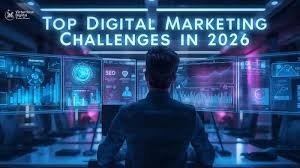
While AI in Digital Marketing brings significant benefits, it also presents several challenges that businesses must carefully manage. These challenges often relate to data quality, ethics, and implementation complexity. AI in Digital Marketing introduces a range of concerns such as privacy regulations, ethical use of data, and the difficulty of integrating advanced AI systems into existing marketing infrastructures. Since AI in Digital Marketing heavily depends on large volumes of accurate data, any inconsistencies, biases, or gaps in data can lead to incorrect predictions and poor decision-making, which may negatively impact campaign performance.
Ethical issues like user privacy, data security, and transparency are major concerns in 2026.
Businesses must follow data protection rules while still offering personalized experiences.
Integrating AI into marketing systems can be complex, costly, and requires skilled professionals.
Balancing innovation with responsibility is key for trustworthy AI-driven marketing.
H3: Key Challenges of AI in Digital Marketing 2026
- Data privacy concerns: Handling large volumes of user data raises security and compliance issues.
- High implementation costs: Advanced AI systems require investment in tools and infrastructure.
- Dependence on data quality: Poor-quality data leads to inaccurate predictions.
- Lack of human creativity: Over-automation can reduce emotional and creative depth in marketing.
- Continuous system maintenance: AI models require regular updates and training.
H2:Future Trends in Digital Marketing 2026 and Beyond
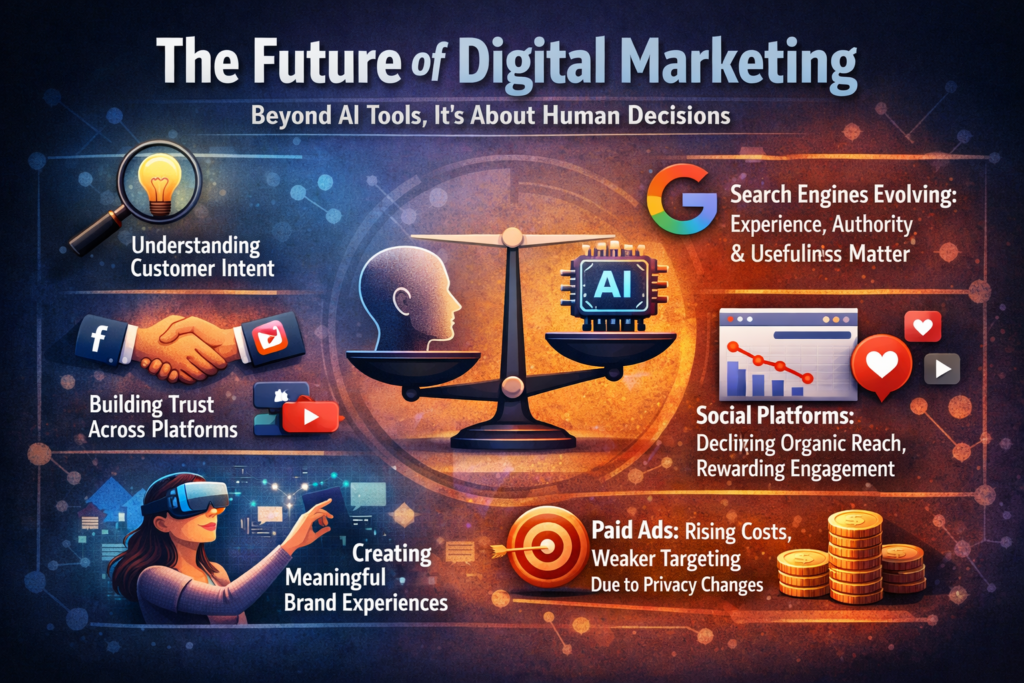
The future of AI in digital marketing is expected to become significantly more advanced, intelligent, and deeply integrated into every stage of the customer journey. As technology continues to evolve, marketing systems will move beyond simple automation toward fully autonomous ecosystems where AI can independently plan, execute, monitor, and optimize entire human interactions.
In addition to automation, personalization will become far more precise and emotionally intelligent, enabling brands to deliver experiences that feel uniquely tailored to each individual user. Predictive systems will also become more accurate, allowing businesses to anticipate customer needs even before they are expressed. This shift will redefine how marketing teams operate, as human roles will increasingly focus on strategy, creativity, and oversight while AI handles execution at scale. Ultimately, the future of AI in marketing will be increaseinfuture
H3: Future Trends and Key Developments of AI in Digital Marketing 2026 and Beyond
- Fully automated end-to-end marketing campaigns:
AI will manage entire marketing campaigns from planning to execution, including targeting, ads, content, and optimization with minimal human input. - Real-time hyper-personalized customer journeys:
Customer experiences will adjust instantly based on behavior, ensuring highly relevant content, offers, and recommendations at every step. - AI-generated video, voice, and interactive content:
AI will quickly create videos, voiceovers, and interactive content, making content production faster and more scalable. - Emotion-aware marketing systems:
AI will detect user emotions and adjust messaging to match sentiment, improving engagement and connection.
H2: The Impact of AI in Digital Marketing in 2026
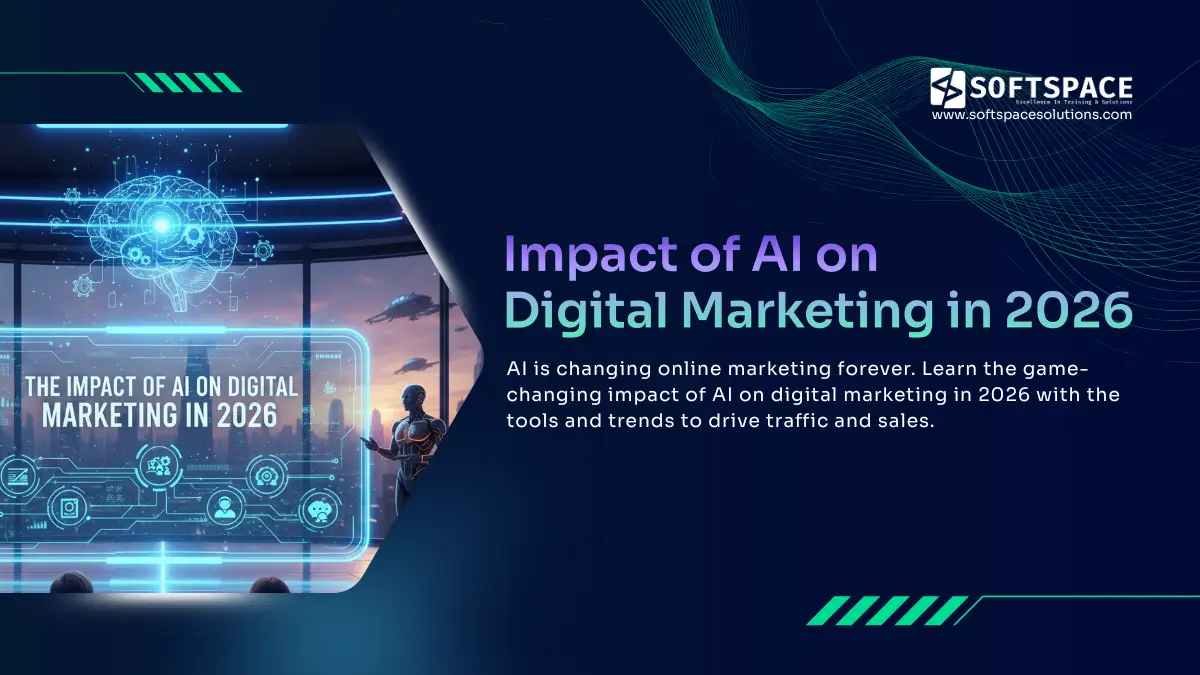
In 2026, AI in Digital Marketing is no longer just a futuristic concept—it has become a central driver of how businesses connect with their audiences, optimize campaigns, and make data-driven decisions. From predictive analytics and customer segmentation to personalized content recommendations and automated ad placements, AI is transforming every aspect of marketing. Companies that leverage AI in Digital Marketing gain the ability to understand customer behavior at a granular level, anticipate needs, and deliver highly relevant experiences in real time.
The impact of AI in Digital Marketing extends beyond efficiency; it enhances engagement by delivering personalized experiences tailored to individual preferences. Brands that adopt these technologies early are able to build stronger relationships with customers, improve brand loyalty, and maintain a competitive advantage in a rapidly digitype.
H3: Key Benefits of AI in Digital Marketing
In 2026, AI in Digital Marketing In 2026 has become an essential tool for businesses seeking efficiency, precision, and growth. By leveraging advanced algorithms and data-driven insights, AI helps marketers create more personalized experiences, optimize campaigns, and make smarter decisions faster. The key benefits include:
- Enhanced Customer Targeting: AI in Digital Marketing analyzes large datasets to identify patterns and predict customer behavior, helping businesses reach the right audience at the right time.
- Personalization at Scale: With AI, marketers can deliver tailored content, product recommendations, and offers that resonate with individual users, improving engagement and loyalty.
- Automation of Repetitive Tasks: Tasks like email scheduling, social media posting, and performance reporting are automated, freeing marketers to focus on strategy and creativity.
- Predictive Insights: AI tools forecast trends, anticipate customer needs, and guide campaign decisions, allowing businesses to act proactively rather than reactively.
- Improved ROI and Performance: AI optimizes ad placements, content distribution, and budget allocation, resulting in better conversions and higher return on investment.
H2: Conclusion on AI in Digital Marketing 2026
AI has fundamentally transformed digital marketing in 2026, making it more intelligent, efficient, and customer-focused than ever before. It has redefined how businesses understand audiences, create content, run advertising campaigns, and optimize performance across digital channels.
By combining real-time data analysis, predictive insights, and automation, AI enables marketers to make faster and more accurate decisions. This not only improves campaign performance but also enhances customer satisfaction by delivering more relevant and personalized experiences.
Businesses that fully embrace AI are gaining a clear competitive advantage in today’s fast-paced digital environment. They are able to scale faster, reduce operational costs, and achieve higher ROI compared to traditional marketing methods.
Ultimately, AI is not replacing digital marketers—it is enhancing their capabilities. The future belongs to those who can effectively combine human creativity with AI-driven intelligence to build meaningful, data-backed, and high-performing marketing strategies.