
Introduction
The digital business landscape is changing faster than ever, and brands that fail to adapt can quickly lose visibility, customers, and revenue. Understanding the latest digital marketing trends is therefore essential for businesses that want to remain competitive and to build a stronger online presence, businesses should also understand effective digital marketing strategies that can turn these trends into measurable results. sustainable growth. From artificial intelligence and personalized customer experiences to short-form video, social commerce, automation, and search optimization, modern marketers have more opportunities than ever to connect with their audiences.
The most successful companies are no longer relying on a single channel. Instead, they are combining data, technology, creative content, and customer insights to create meaningful experiences throughout the buyer journey. In this guide, we explore 10 digital marketing trends that can influence business growth in 2026 and beyond. Whether you run a startup, small business, e-commerce company, or established brand, these trends can help you develop a smarter and more effective marketing strategy
Table of Contents
1. AI-Powered Marketing Will Become a Competitive Advantage
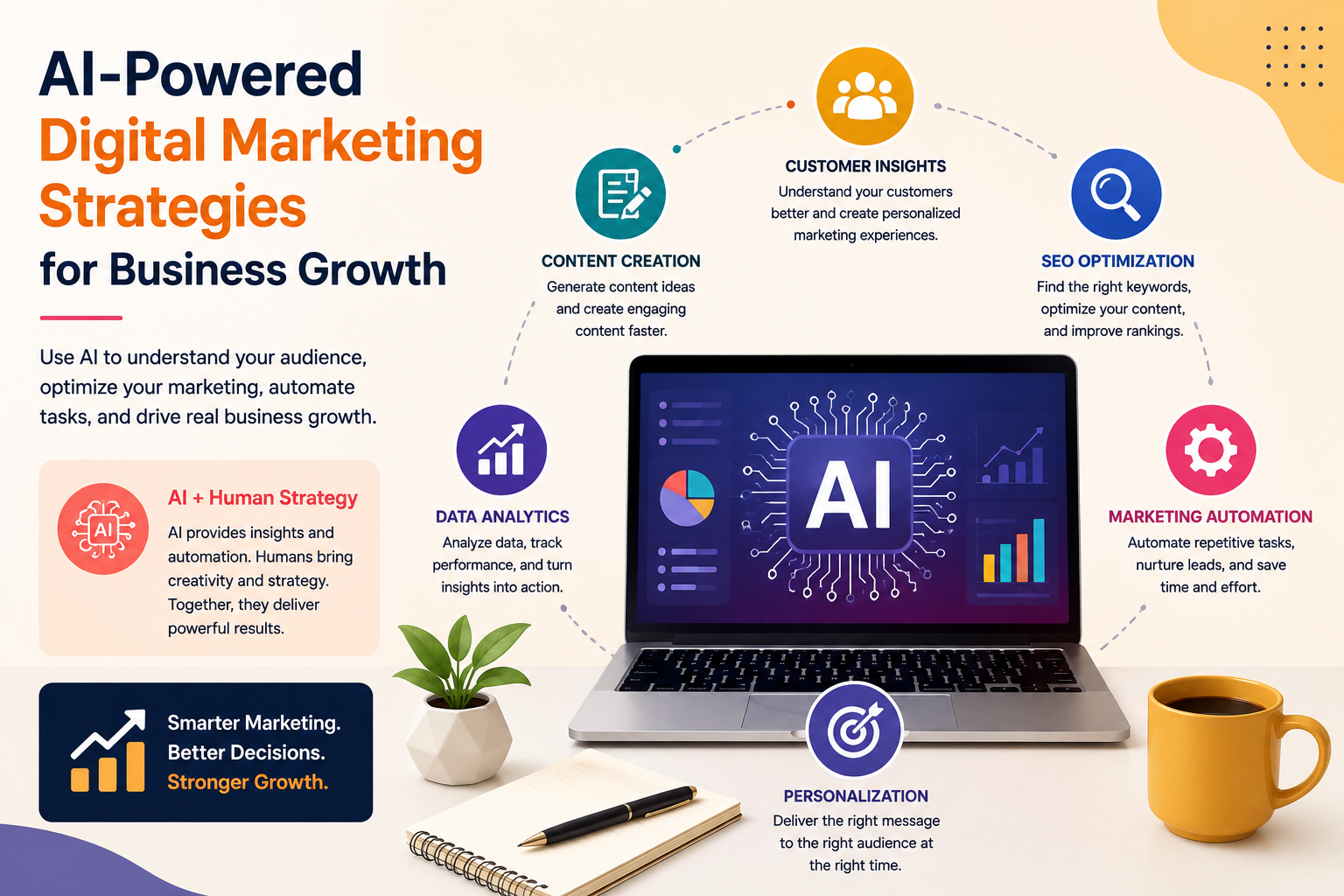
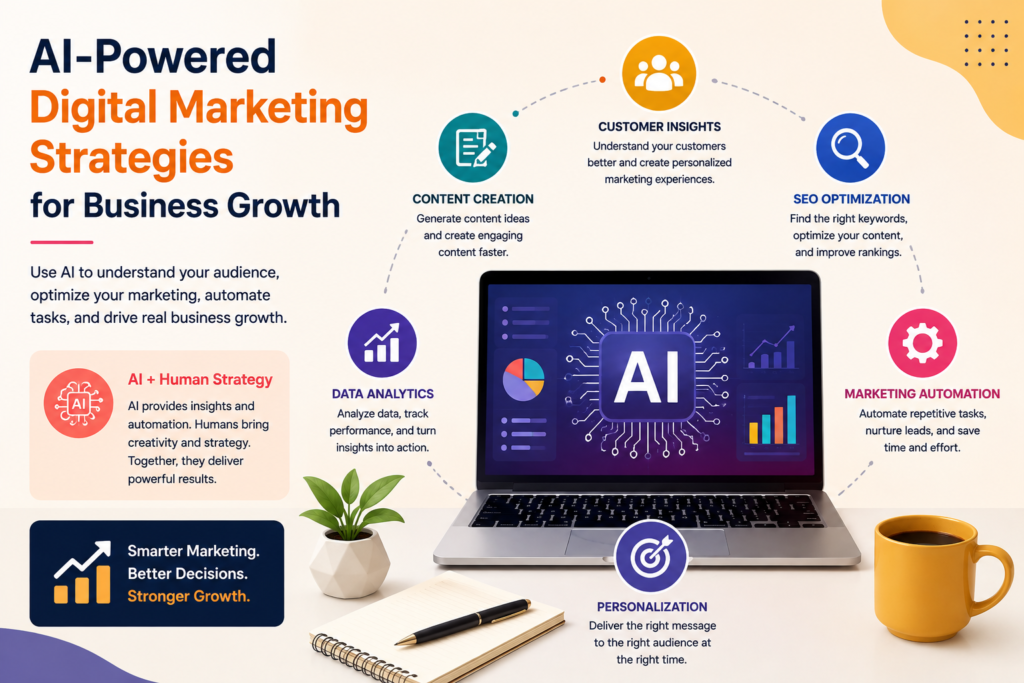
Artificial intelligence is one of the most influential digital marketing trends businesses need to understand. AI can help marketers analyze customer behavior, identify patterns, generate ideas, automate repetitive tasks, and improve campaign efficiency.
Rather than replacing marketers completely, AI is becoming a productivity tool that allows marketing teams to spend more time on strategy, creativity, and customer relationships. Businesses that learn how to combine AI capabilities with human judgment can potentially create faster and more personalized campaigns.
How businesses can use AI
- Content assistance: Generate ideas, outlines, variations, and content briefs faster.
- Customer insights: Analyze large amounts of behavioral data to identify patterns.
- Campaign optimization: Identify which messages, audiences, and channels perform best.
- Chatbots: Provide immediate answers to common customer questions.
- Predictive analysis: Use historical information to support better marketing decisions.
The key is to use AI responsibly. Human review, brand consistency, factual accuracy, privacy, and originality should remain priorities.
2. Personalized Customer Experiences Will Drive Conversions
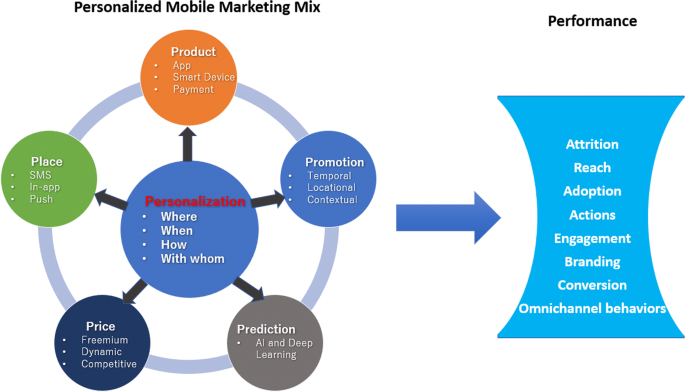
Personalization is another important part of modern digital marketing trends. Customers increasingly expect brands to understand their interests instead of presenting identical messages to everyone.
Businesses can use customer data and behavioral signals to create more relevant experiences. For example, an online store can recommend products based on previous browsing behavior, while an email campaign can provide different messages according to customer interests.
Effective personalization strategies
- Segment audiences: Group customers according to behavior, interests, location, or buying stage.
- Personalize email: Create messages that reflect individual customer needs.
- Recommend relevant products: Show products based on browsing or purchase history.
- Customize offers: Provide suitable promotions instead of sending the same discount to everyone.
- Adapt landing pages: Match page messaging with the visitor’s intent.
Good personalization should feel helpful rather than intrusive. Businesses should always balance relevance with responsible data usage.
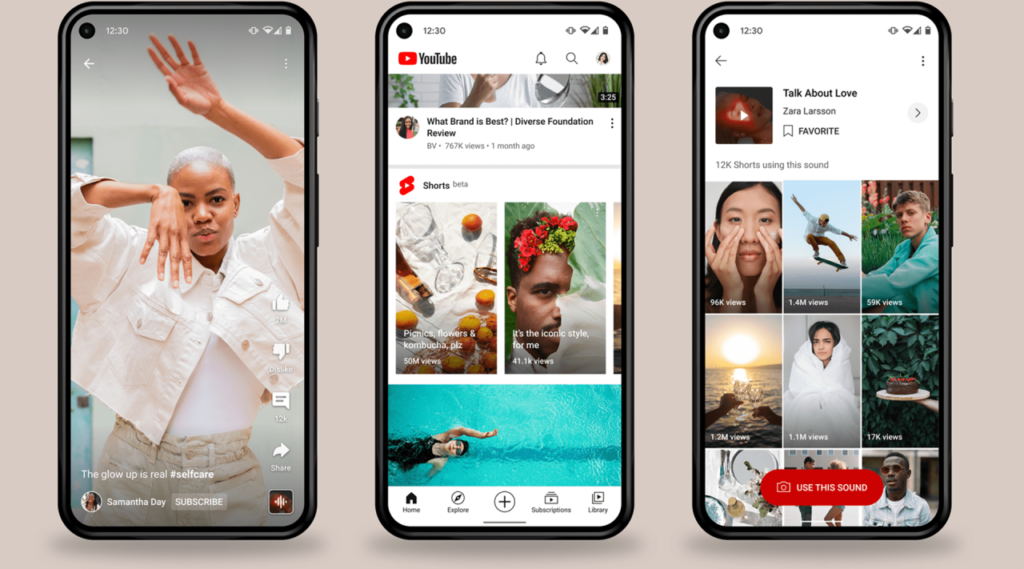
3. Short-Form Video Will Continue to Capture Attention
Short-form video remains one of the most engaging digital marketing trends because consumers can understand an idea quickly through visual storytelling. Businesses can use short videos to educate audiences, demonstrate products, answer questions, share behind-the-scenes content, and build brand personality.
The advantage of short-form content is that businesses do not always need expensive production equipment. A clear idea, strong opening, useful information, and authentic presentation can be more valuable than a highly produced advertisement.
Short-form video ideas
- Product demonstrations: Show how a product solves a real problem.
- Educational tips: Answer common questions within 30–60 seconds.
- Behind-the-scenes videos: Give customers a look at your team and processes.
- Customer stories: Share authentic experiences and testimonials.
- Quick tutorials: Teach audiences how to accomplish a specific task.
Focus on delivering value quickly rather than simply creating videos because video is popular.
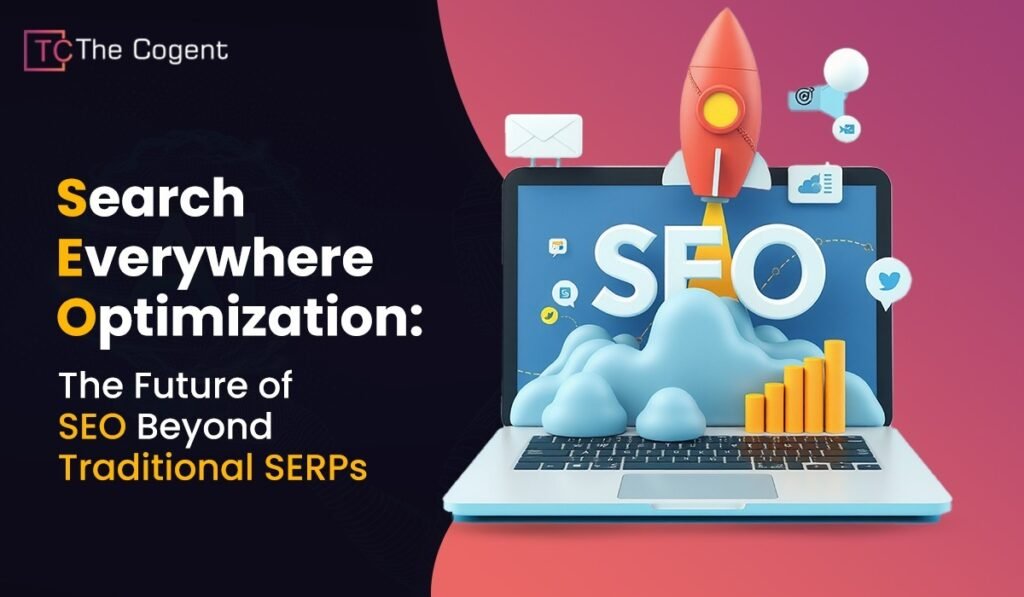
4. Search Optimization Will Expand Beyond Traditional Keywords
SEO is evolving, making search optimization one of the most important digital marketing trends to monitor. Search engines increasingly attempt to understand the meaning behind queries instead of simply matching individual keywords.
This means businesses should create comprehensive content that answers users’ questions clearly. Keyword placement still matters, but topical relevance, helpfulness, content quality, website experience, and trust are also important.
Build a stronger search strategy
- Understand search intent: Determine what the user actually wants to accomplish.
- Cover topics comprehensively: Answer related questions instead of focusing on one phrase.
- Improve page experience: Make pages fast, mobile-friendly, and easy to navigate.
- Use descriptive headings: Organize content logically.
- Demonstrate expertise: Include useful examples, evidence, and first-hand insights.
Businesses should optimize for people first while making content easy for search engines to understand.
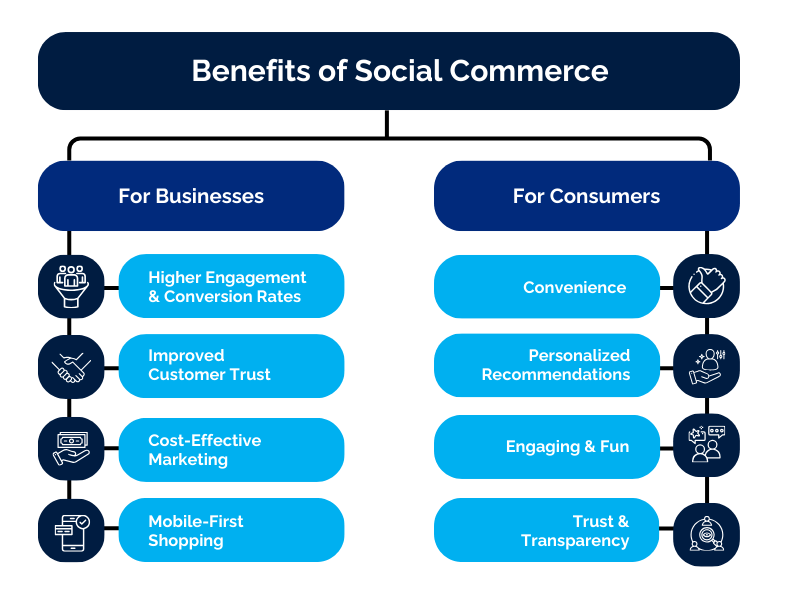
5. Social Commerce Will Shorten the Buying Journey
Social commerce is another major area among emerging digital marketing trends. Consumers increasingly discover products through social platforms, interact with brands, watch product demonstrations, and make purchasing decisions without following a long traditional sales funnel.
This creates an opportunity for businesses to turn social media into more than a brand-awareness channel. When discovery, education, engagement, and purchasing are connected, brands can reduce friction in the customer journey.
Ways to strengthen social commerce
- Create shoppable content: Make product discovery as simple as possible.
- Use creator partnerships: Work with creators whose audiences match your target market.
- Demonstrate products: Show real-world use cases instead of relying only on promotional images.
- Share customer content: Encourage customers to create authentic experiences.
- Answer questions quickly: Use comments and messages as opportunities to support buying decisions.
Trust is particularly important in social commerce. Authentic demonstrations and genuine customer experiences can make promotional content more persuasive.
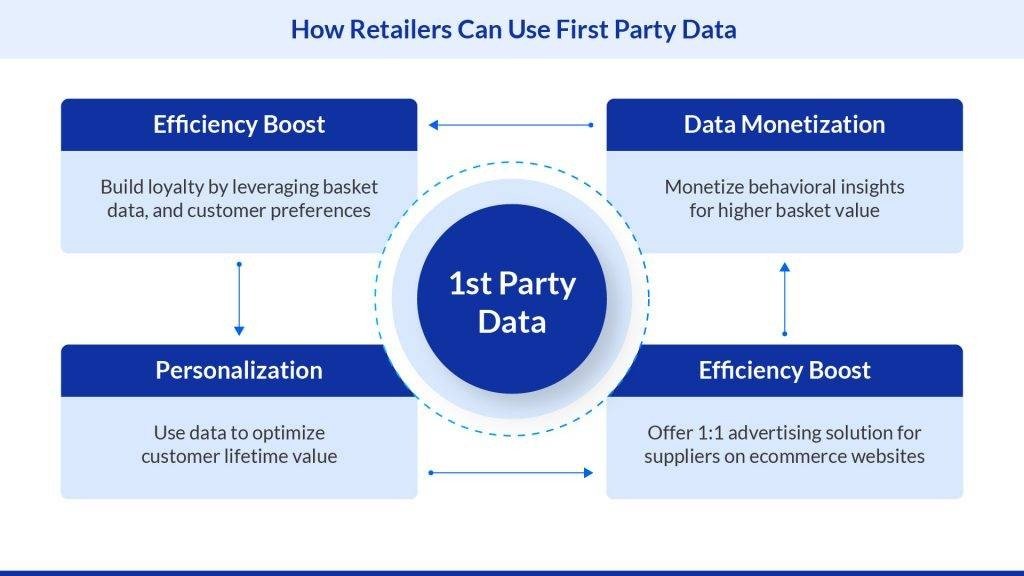
6. First-Party Data Will Become More Valuable
As privacy expectations evolve, first-party data is becoming an increasingly valuable component of digital marketing trends. First-party data is information a business collects directly from its customers or audience through legitimate interactions.
Examples include website interactions, email subscriptions, purchases, customer preferences, surveys, and account information.
Build a first-party data strategy
- Create valuable lead magnets: Give audiences a genuine reason to subscribe.
- Use preference centers: Allow customers to choose what information they want.
- Collect feedback: Surveys can reveal valuable customer insights.
- Strengthen customer relationships: Loyal customers can provide richer behavioral information.
- Respect privacy: Clearly explain how customer information is collected and used.
A strong data strategy is not simply about collecting more information. It is about collecting useful information responsibly and using it to improve customer experiences.
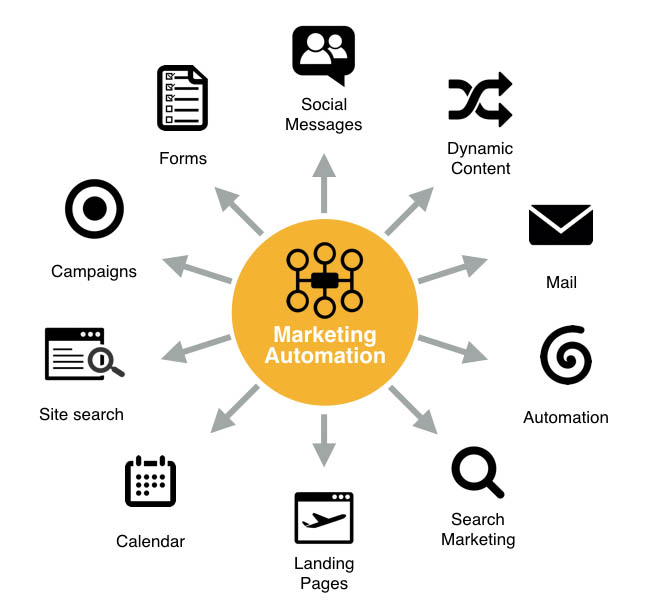
7. Marketing Automation Will Improve Efficiency
Automation continues to influence digital marketing trends because it allows businesses to handle repetitive processes more efficiently. Automated workflows can help marketers nurture leads, communicate with customers, segment audiences, and monitor campaigns.
For growing businesses, automation can be especially useful because a small marketing team may not have enough time to perform every task manually.
Marketing automation opportunities
- Email sequences: Automatically send relevant messages based on customer actions.
- Lead nurturing: Guide prospects through different stages of the buying journey.
- Customer onboarding: Provide helpful information after a purchase or signup.
- Abandoned-cart campaigns: Remind potential customers about unfinished purchases.
- Reporting: Automate recurring performance reports.
Automation should support customer relationships rather than make communication feel robotic. Every automated interaction should have a clear purpose.
8. Influencer Marketing Will Shift Toward Authenticity
Influencer marketing is evolving from celebrity-focused campaigns toward more targeted creator relationships. This shift is one of the digital marketing trends that can create significant opportunities for niche businesses.
Smaller creators often have highly focused communities and stronger relationships with their audiences. For businesses, the right creator may be more valuable than the creator with the largest follower count.
Choose creators strategically
- Check audience relevance: The creator’s audience should match your ideal customer.
- Evaluate engagement: Look beyond follower numbers.
- Review content quality: Make sure the creator fits your brand.
- Prioritize authenticity: Avoid partnerships that feel forced.
- Measure outcomes: Track traffic, leads, sales, and other campaign objectives.
The strongest creator campaigns feel like useful recommendations rather than conventional advertisements.
9. Interactive and User-Generated Content Will Build Trust
Interactive experiences are becoming increasingly important within digital marketing trends because audiences want to participate rather than simply consume promotional messages.
Quizzes, polls, calculators, assessments, contests, customer reviews, and user-generated content can make marketing more engaging. These formats can also provide businesses with useful insights into customer preferences.
Content formats to experiment with
- Interactive quizzes: Help customers identify the right product or solution.
- Polls: Ask audiences for opinions and preferences.
- Customer reviews: Showcase genuine experiences.
- User-generated videos: Allow customers to demonstrate products themselves.
- Interactive calculators: Help users estimate costs, savings, or requirements.
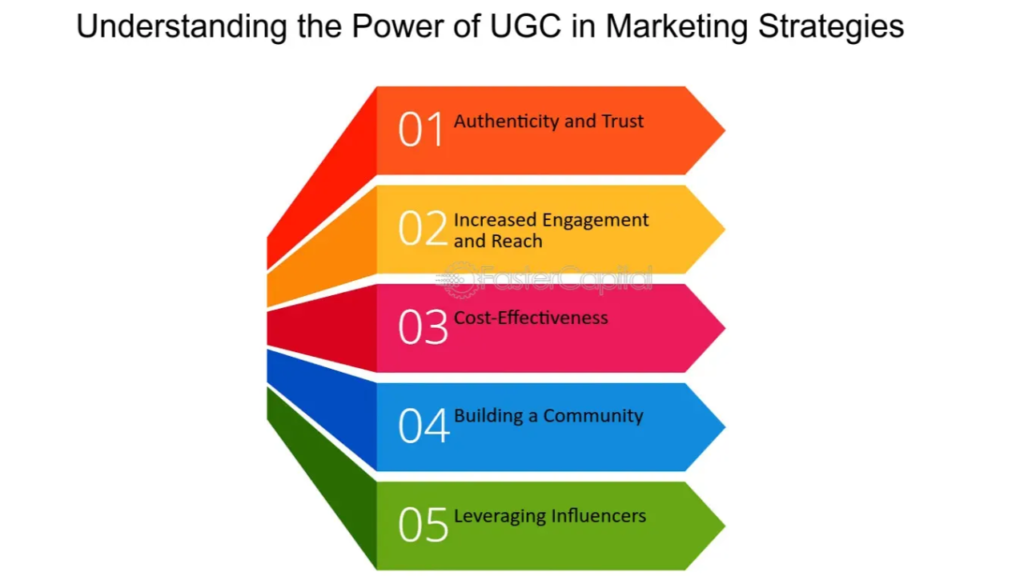
User-generated content can be particularly powerful because customers may trust experiences from other customers more than traditional promotional claims.
10. Omnichannel Marketing Will Create Consistent Brand Experiences
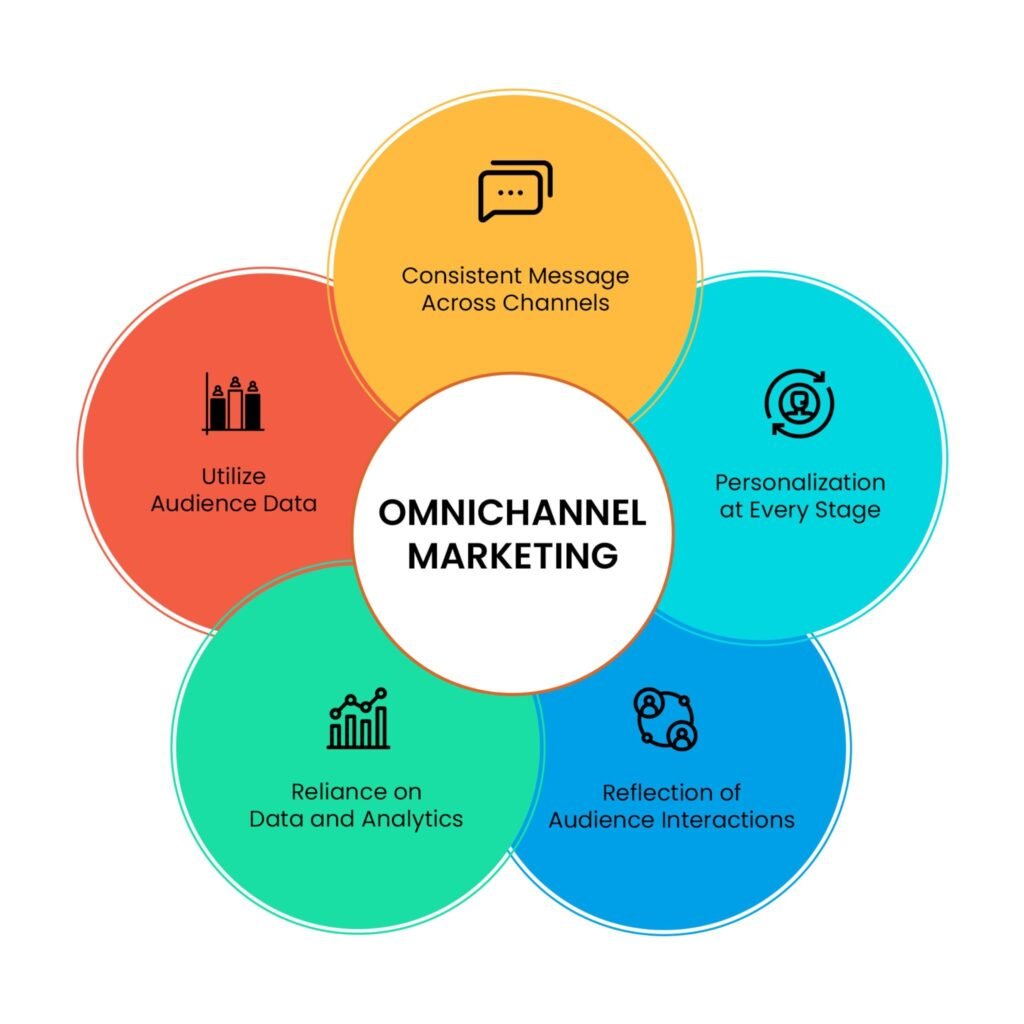
The final trend on our list is omnichannel marketing. Among all digital marketing trends, this approach is particularly important because customers rarely interact with a business through only one channel.
A customer might discover a company through search, watch its videos on social media, visit the website, receive an email, and eventually make a purchase through a mobile device. Businesses need to make these experiences feel connected.
Create a stronger omnichannel strategy
- Maintain consistent branding: Use recognizable messaging and visual identity.
- Connect customer data: Understand interactions across different touchpoints.
- Coordinate campaigns: Avoid sending conflicting messages across channels.
- Optimize mobile experiences: Make every important interaction mobile-friendly.
- Measure the complete journey: Look beyond individual channel performance.
The goal is not simply to appear everywhere. The goal is to make every customer interaction feel like part of the same brand experience.
How to Choose the Right Digital Marketing Trends for Your Business
Not every trend will be equally valuable for every company. One of the biggest mistakes businesses make is trying to adopt every new technology or platform simultaneously.
Instead, identify the trends that directly support your business objectives. A B2B company may benefit more from AI-assisted content, SEO, automation, and thought leadership, while an e-commerce company may prioritize short-form video, personalization, social commerce, and creator marketing.
Use this simple decision framework
- Start with your objective: Decide whether you need awareness, leads, sales, retention, or loyalty.
- Understand your audience: Identify where your customers spend time and what content they prefer.
- Assess your resources: Consider budget, technology, people, and available expertise.
- Test before scaling: Start with small experiments.
- Measure business outcomes: Connect marketing activities to meaningful results.
A focused strategy is usually more sustainable than chasing every new trend.
How to Measure the Success of Your Digital Marketing Strategy
Following digital marketing trends is only useful when you can determine whether your efforts are producing results. Vanity metrics such as views or impressions can be useful for awareness, but businesses should also monitor metrics connected to actual objectives.
Important performance metrics
- Organic traffic: Measures visitors arriving through search engines.
- Conversion rate: Shows how effectively visitors take desired actions.
- Cost per lead: Helps evaluate lead-generation efficiency.
- Customer acquisition cost: Shows the average cost of gaining a customer.
- Return on investment: Helps determine whether marketing generates sufficient business value.
- Customer lifetime value: Estimates the long-term value of customers.
- Engagement rate: Indicates how audiences interact with content.
Review these metrics regularly and use the results to improve future campaigns.
CONCLUSION:
The biggest digital marketing trends shaping business growth are not simply about adopting the newest technology. They are about understanding customers, delivering useful experiences, creating relevant content, and using data intelligently.
AI, personalization, short-form video, search optimization, social commerce, first-party data, automation, creator marketing, interactive content, and omnichannel experiences can all create new opportunities. However, successful businesses will be the ones that select the right strategies for their audience rather than blindly following every trend.
The future of marketing will combine technology with human creativity. Businesses that experiment, measure results, learn from customers, and continuously improve their strategies will be better positioned to grow in an increasingly competitive digital environment.
